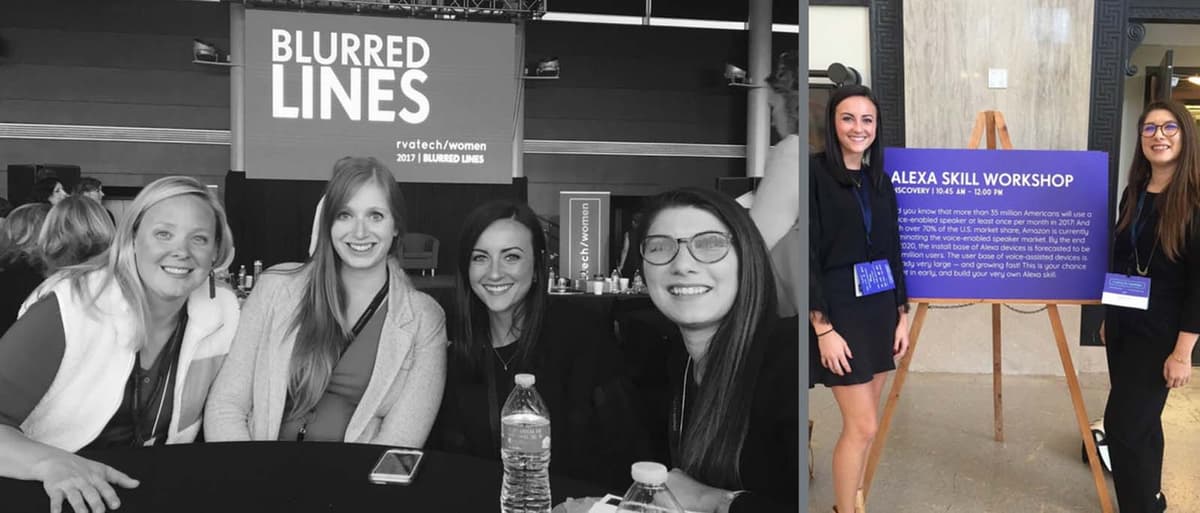
Recently, I had the pleasure of attending the RVATech/women an annual conference focused on women and technology. The event brings together a range of women in technology in the surrounding area to discuss technology, network and most importantly learn from one another.
The conference started with keynote speaker, MIT scientist Jeanne Ross. Mrs. Ross focused her speech around how companies will transform themselves for success in the digital economy. However, her presentation went above and beyond just one topic. At a high-level overview, Mrs. Ross touched on the importance of the business defining challenges properly so the IT department can do their job correctly, how companies need to focus on more foundational aspects of data before they are ready for big data and all the way to artificial intelligence.
A few takeaways that stuck with me:
- When a new technology comes around, we need to understand the technologies prior to being able to understand the future.
- Big Data – nowadays, you can’t go a day without seeing this buzzword. Mrs. Ross touched on if a company wants to invest crazy funding toward this initiative, they need to first understand their data and make sure it is clean. If you can’t use little data, you can’t do big data. The simplest way of putting it!
- Jeanne wrapped up with a few leadership principles
- Forget how things used to be (always build on these things but be able to forget)
- Think outside the box
- Measure impact- did we accomplish something? Did we increase sales? (those should be our goals)
- Lastly, change the world!
If you ever have the opportunity to see this brilliant woman speak, I highly suggest it!
During the conference, we had the opportunity to sign up for a tech breakout session. A colleague and I chose to sit in on the session “Becoming Technical: Increase your Coding Confidence.” We both thought it would be a great session to sit in on since we are both on the sales side at UDig and jump at the opportunity to learn all things tech.
The presenter, Andrea Goulet, was brilliant and relatable. Her presentation focused on why we are so quick to call ourselves “technical” and “nontechnical”. More often than not, the business side of the organization (a CEO like Andrea, a Talent Acquisition Specialist, a Business Development Rep, etc.) are so quick to label themselves nontechnical. Andrea made the great point that you can be BOTH! Shocking, right? All you need is to change the way you think and have an open mindset. A few takeaways:
- There are a ton of great resources online for beginners who want to learn how to code.
- You can consider yourself technical even if you don’t understand EVERYTHING about software. Very few people know all there is to know about software.
- You don’t have to be a perfectionist, you just have to have a capacity to learn.
All in all, this was a great experience and this brief summary doesn’t do it justice. Hearing and learning from such prominent women who have truly made a difference was inspiring. From the digital economy, big data, voice technology, blockchain and leadership traits, there was something for everyone.
One final takeaway from the RVATech/women Conference I think summarizes the day is that there are some truly brilliant women in technology and the field needs more! Companies are 34% more profitable with diversity. I feel so lucky to be part of a company that not only welcomes diversity but celebrates it.