When UDig was asked to explore ways to accelerate delivery, the brief was intentionally open-ended, inviting the team to rethink existing processes and challenge assumptions. One area quickly emerged as a clear opportunity: discovery. While essential, discovery can slow momentum when large volumes of requirements must be manually translated into user stories.
Like most projects, discovery generates a significant amount of information that then needs to be quickly converted into user stories so teams can estimate and begin development. For anyone responsible for turning requirements into user stories, they know this translation process is often time-consuming, detail-heavy, and repetitive.
How could UDig be creative and speed up the requirements and user story writing process? The answer was to look at AI and workflow automation tools.
For this scenario, we utilized Confluence, Jira, and a low-code workflow automation tool that integrates with AI services (called n8n) to mimic what the possible discovery and beginning of a development project could look like. To start, initial user stories, information, and other documentation were put into Confluence to capture requirements gathering. Once this set up was complete, the team created an n8n workflow that utilized an AI agent to interface with Confluence and Jira to perform the story-generation tasks.
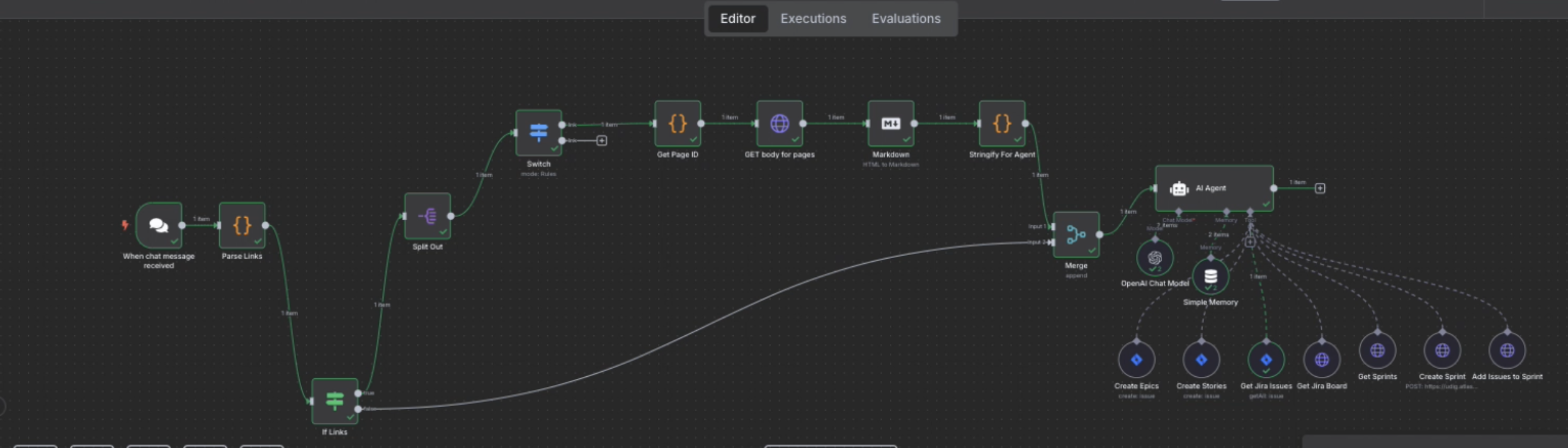
This specific workflow utilized a chat input from the user to trigger the workflow including the URL to the Confluence page. This then triggered a subflow utilizing the Confluence API to read the contents of the page, format it appropriately, and send the information to the n8n AI Agent. After the AI Agent received that information, it was prompted to generate user stories and groupings of features, called epics. This is then displayed to the user within the chat window of n8n.
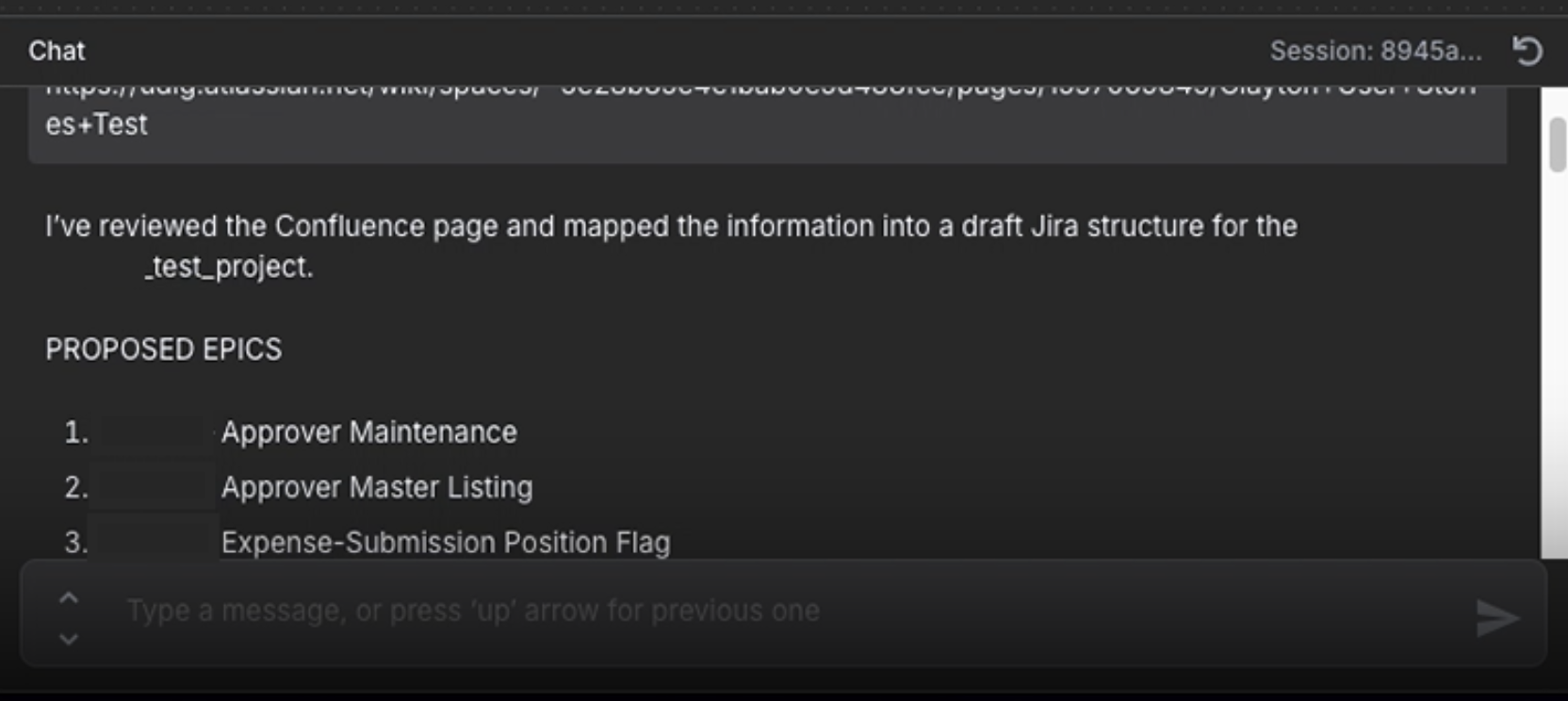
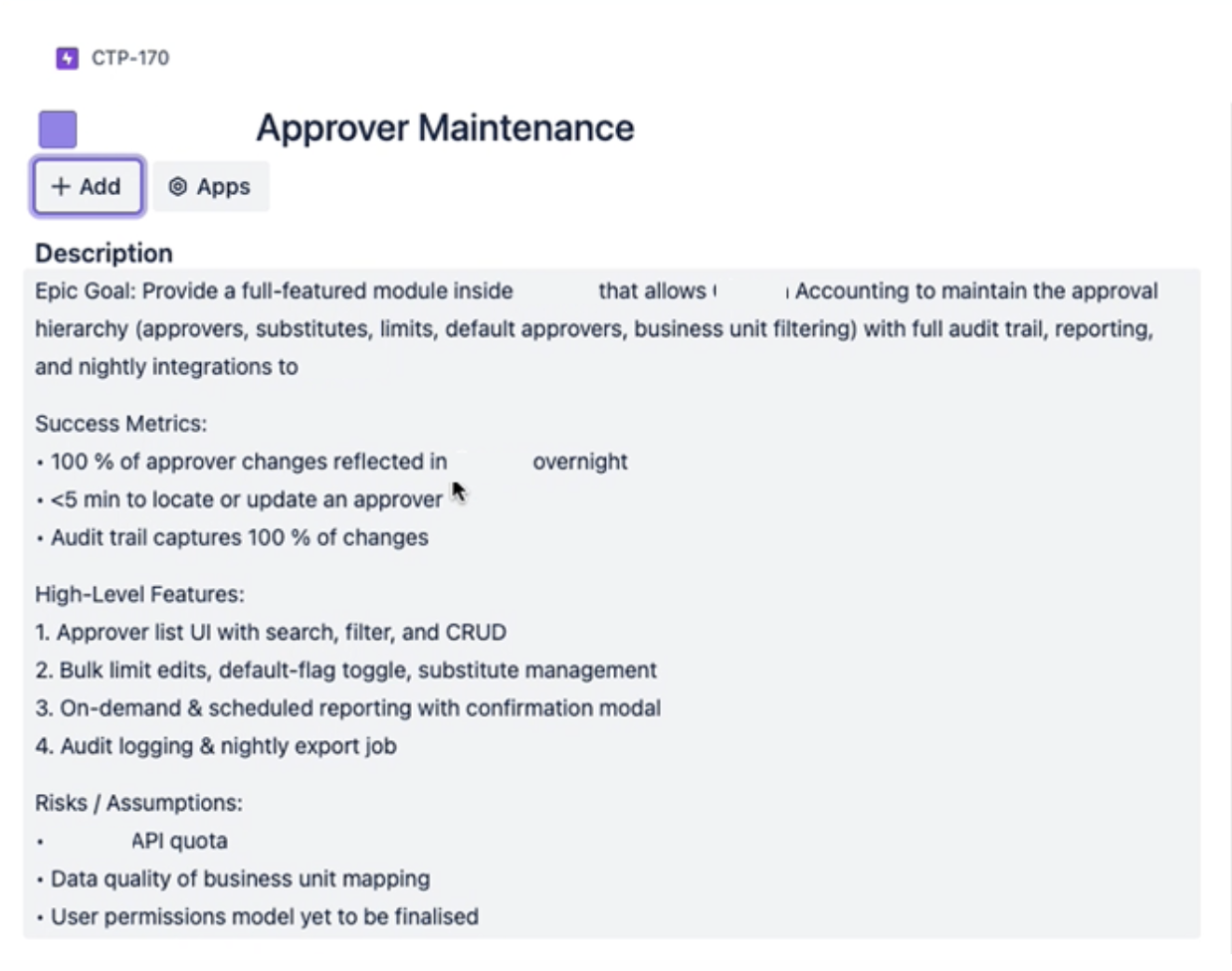
Once the output is created from the AI Agent and confirmed by a user, the user can then prompt the AI Agent to create the user stories and epics within Jira. The n8n AI Agent can autonomously invoke a function, script, or API call based on the need. For this use case, the n8n Agent made a call to the Jira API to create the new Stories and Epics within the identified Jira instance.
There are numerous benefits of utilizing AI and n8n during the during the Discovery phase:
- Consistency – Instead of multiple resources writing user stories, estimating, etc., there is one source providing that information, leading to more consistency.
- Traceability – Since an AI tool is being utilized, it can provide documented insight into why and how things were done the way they were. The user can also set up more data to be captured for even more value add.
- Faster Feedback Cycles – Since this workflow executes creating user stories faster, resources can review what was created and make any adjustments sooner in the project, than waiting for them to be manually set up.
- Audit Trail – Since these tools are logging what they are doing, there is a natural audit log created to go back and look at what was done and when.
Instead of spending days, weeks, or months setting up a project for development, regardless if you are working in an agile or waterfall methodology, an automation like this can now run and get through the Discovery phase in a fraction of the time, moving on to development, and providing more value to the customer quickly.