
About Tate Steinour
Tate is a Senior Consultant on the Software Engineering team.
This site uses cookies to enhance your browsing experience and deliver personalized content. By continuing to use this site, you consent to our use of cookies.
COOKIE POLICY
When I look back at my career in technology one day, I believe that 2025 will be the year I reflect upon as when everything changed. There was software engineering pre-2025 and software engineering post-2025. Late 2024 is when the AI-Powered IDE’s, specifically Windsurf and Cursor, came to market. Quickly followed by agentic coding tools such as Claude Code and OpenAI’s Codex.

We jumped in immediately, and what followed changed how our entire team works. Starting on a new greenfield project at the beginning of 2025 with these powerful options at our disposal was a game-changer. It didn’t take long before our engineering team at UDig was able to get a feel for how these AI coding tools operated and where we could leverage their capabilities.
As with any new project that begins from scratch, there is a ton of boilerplate code that is cumbersome, although trivial usually. Being able to simply prompt the LLM for the patterns and structure we wanted and watch it go and knock out all that code for us instantaneously was eye-opening. We could verify right away that this was a legitimate time-saver for engineers. It helped us that we used popular frameworks and languages in our tech stack that the LLMs have the most knowledge on. This should definitely be a major consideration for dev teams in the future when it comes to making tech stack decisions.
Nearly every day as a software engineer, I’d have to Google a question about language syntax, a best practice pattern, an imported library behavior, a cryptic error message, or any type of coding-related question, for that matter. I knew what I wanted to do and how I wanted to do it. It was often the implementation piece that would take longer. Stack Overflow, GitHub Discussions, and even Reddit, were almost always present tabs in my browser whenever I was developing.
Now, whenever I encounter these questions, and I am unsure right away as to what the answer is, I can stay in my IDE, text editor, or terminal, and simply prompt AI by describing the behavior or pasting in a log, and it’ll have the correct diagnosis and solution in less than a minute most times. Software engineers used to joke that they were professional Googlers and copy-and-pasters in the past. Those days are no longer.
With all the time saved as an engineer from copying and pasting busy-work template code and scouring the web researching solutions to bugs, we have significantly increased our throughput as a team. I’d say on average our engineers have 5x’d the work that they have been able to complete in the past.
For example, when I encountered a multi-line drag and drop feature request, a capability that I had not individually developed for in the past, the main work I had to do involved researching a drag and drop JavaScript library that was going to support all the bells and whistles our client wanted. After that, I fed my AI assistant with the documentation and what we wanted to build. Following some manual testing and light massaging of the code through manual tweaks and small prompts, we had ourselves a UAT-ready drag and drop feature by the end of a single workday. Looking at the drag and drop code that was generated, I estimate that it saved me about 5 days’ worth of work had I manually poured through the documentation and implemented it myself, an entire work week.

Generally speaking, nearly everything we create as software engineers has already been created before in some type of flavor. Don’t waste any more time looking up how to reinvent your version of the wheel; AI already knows how to do it.
Overall, the key is that these AI models are able to unblock engineers faster than ever before so they can stay productive. I highly recommend that all engineering teams, if they aren’t already, start embracing these AI coding tools as soon as possible before they are left behind.
The software development process has continuously transformed over time since its inception, with many processes being abstracted through layers over time. Languages abstracted from Assembly, to C, to Python. Server configuration abstracted into serverless services in the cloud. Infrastructure abstracted into platforms such as Heroku and Vercel. AI is just another chapter to this story, abstracting the coding implementation part of this comprehensive process (and likely even more in the future).
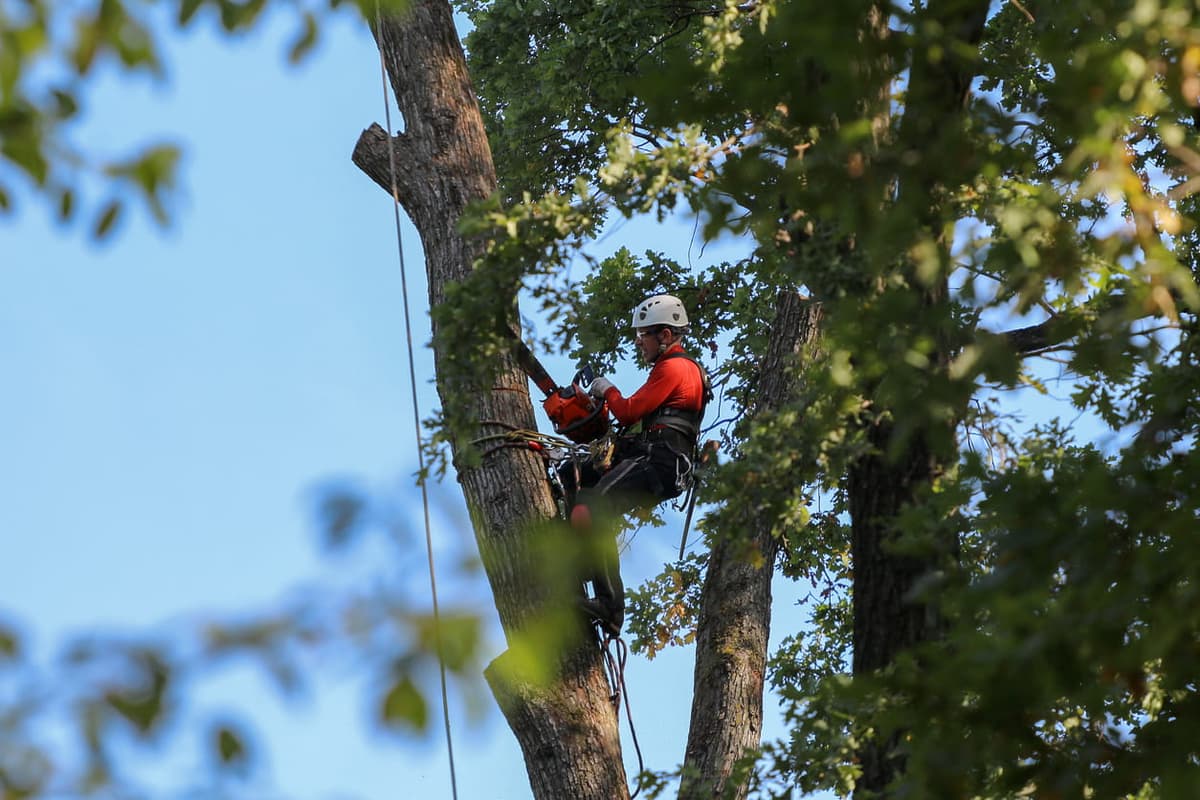
There is an analogy I like to use when people ask me what my job is like now, since AI has become commonplace. Before, we were chopping trees down by swinging axes. Now, we are chopping trees down with high-powered chainsaws. It’s critical to have a fundamental knowledge of how to use the chainsaw, as well as how to properly cut down a tree. Not everyone off the street can pick it up and get the job done the right way. If you don’t have the proper knowledge beforehand, a lot could go wrong!
Tate is a Senior Consultant on the Software Engineering team.