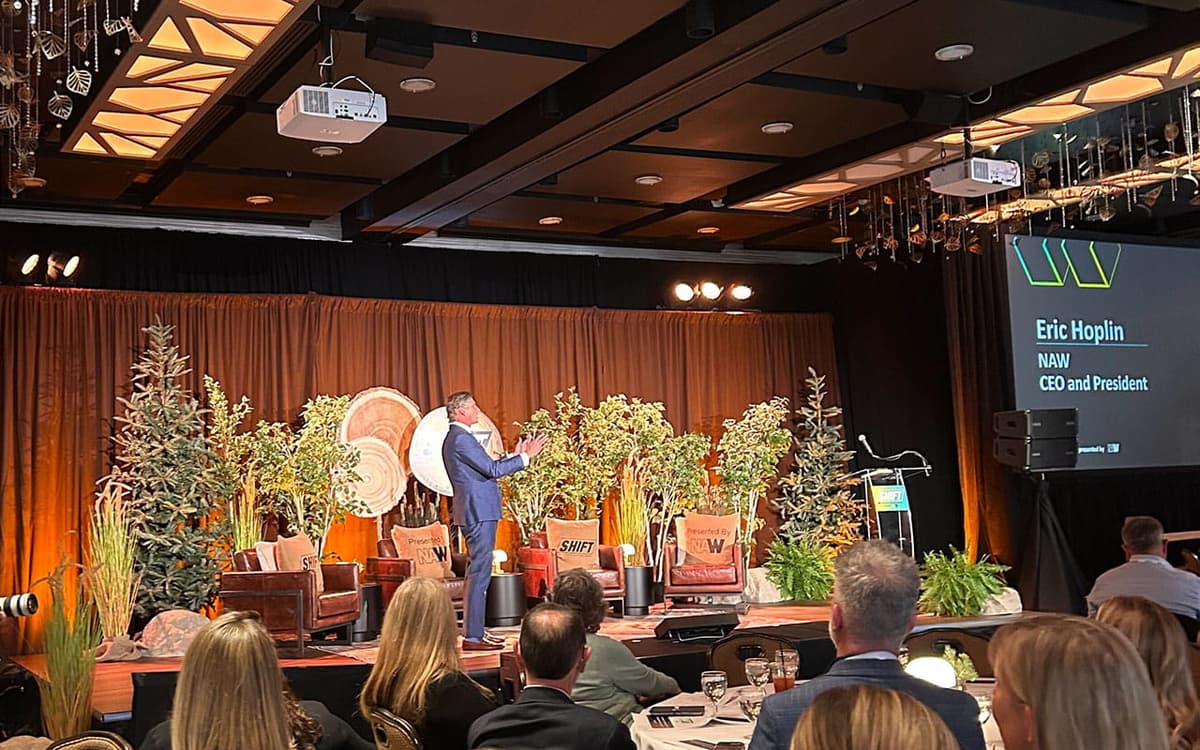
I spent last week in Denver at NAW SHIFT, my first one as an affiliate member. Across the sessions I sat in on, four themes kept coming up in different ways. AI was one of them, but honestly, it was not the most interesting one. The better conversations were about what has to be right underneath the technology before any of it actually works.
Theme 1: From Platform to Performance
Michael Crowley, CIO at Shorr Packaging, walked through pulling Shorr out of an Outlook-driven reporting culture and into a modern cloud and AI-powered BI stack. The win wasn’t the stack. It was the difficult alignment and discovery work behind a customer-facing dashboard they built on top of it, which is now a real differentiator for sales. Endries told a similar story with Project Elevate. The platform only paid off once governance, use cases, and adoption caught up.
UDig’s take: Clients spend a lot of money on ERPs, CRMs, and data platforms, then wonder why the business case never showed up. Usually it is because the platform became the project instead of the foundation. The work we have the most fun with starts the other way around. Pick the outcome the business cares about and work backward. In practice, that means pulling fragmented systems into one experience layer that takes complexity out of the customer’s day. When that layer is in place, the wins start stacking. Faster customer interactions. Tighter quote-to-order. AI that produces real operational insights, which means smarter product recommendations and better margins. And a sales team that finally uses the system instead of working around it.
Theme 2: Ecommerce as an Operating Model, Not a Channel
Howard Blumenthal‘s session was the sharpest one I heard. Distributor ecommerce underperforms because the operating model is broken, not the technology. Commissions punish digital orders, so reps re-enter them offline. Punchout revenue goes unattributed. Onboarding friction sends customers to competitors. The fix is incentives, attribution, and walking from multi-channel to omnichannel to unified commerce before anyone mentions agentic AI.
UDig’s take: The ecommerce site is rarely the problem. The problem is ecommerce got bolted on as a side channel instead of designed into how the company sells, serves, and gets paid. When you collapse the fragments into one experience customers and reps actually want to use, the ROI shows up in places leadership was not measuring. Faster onboarding. Fewer service calls. Bigger accounts staying bigger.
Theme 3: The AI Expectations Gap
MDM’s research got quoted more than anything else. About 73% of distributors expect a 2% or better margin lift from pricing AI, but only 16% have gotten there. Inventory tells the same story. Around 60% expect to be at scale with AI inside twelve months. Demand forecasting and dynamic pricing have emerged as the winners. Logistics is wide open, with more than half of distributors having no plans to put it on the roadmap.
UDig’s take: The gap between what people expect and what they get is almost never about the technology. It is about the data, the workflows, and the adoption. The 16% who got results started earlier and took adoption as seriously as the model selection. For everyone else, the real question is whether the data, workflows, and people are ready to do something useful with what the model produces. That is the work we focus on, and it is usually less flashy and a lot more valuable than the pilot itself.
Theme 4: Operating Discipline as Competitive Advantage
Max from Ludwig Meister was the most concrete speaker I heard. His company grew revenue 40% with only 1% more headcount over a short span. OKRs every four months. Customer-centric teams instead of product silos. A hard rule that no analytics ship without a workflow attached. Specific language in every internal message, because “soon” is not a date and “many” is not a number. The AI work he showed was real, but it sat on top of operating discipline most distributors do not have.
UDig’s take: American distributors tend to be great at sales and marketing and underinvested in operating discipline. The companies pulling ahead are doing both. The technology recommendation is usually the easy part of our client work. The harder and more durable work is helping leadership build the cadence, the metrics, and the adoption muscle that turns any investment, AI or otherwise, into an actual result.
The Throughline
The same thread runs through all four themes. Technology is not the differentiator anymore. The operating model around it is. Distributors who treat platforms, ecommerce, and AI as separate initiatives will keep underperforming their own expectations. The ones who treat them as connected pieces of a smarter way to run the business will compound advantages quickly.
If any of this hits close to home, I would enjoy comparing notes. Thanks to the NAW team for a sharp three days, and to everyone who made time to grab a conversation between sessions.